

Should you trade in your car or sell it privately?
USED CAR SELLING GUIDE
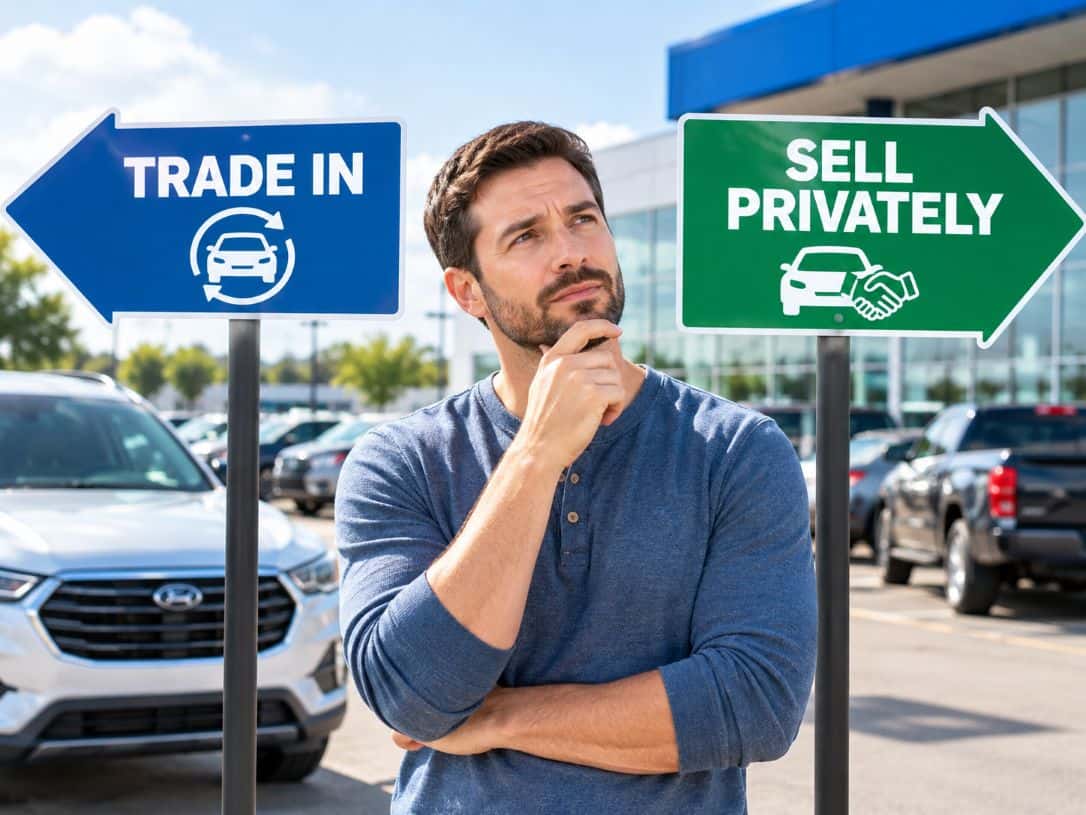
Should you trade in your car or sell it privately? There is no single answer for every vehicle owner. The better choice depends on how much your car is worth, how much time you want to spend selling it, whether you are buying another vehicle, and how much convenience matters to you.
Quick answer: A private sale may give you the opportunity to pursue a higher selling price, but it usually requires more time and effort. A trade-in is generally more convenient, especially when you are purchasing another vehicle at the same time. Compare the money, time, effort and financing implications before deciding.
If you are considering a trade, start by getting an estimate of what your vehicle may be worth with our
Value Your Trade
tool. Having a starting point makes it easier to compare your options.
Trade-In vs. Private Sale: What’s the Difference?
The biggest difference is how the transaction works. When you trade in your vehicle, you are typically applying its trade value toward another vehicle purchase. The dealership handles the appraisal and trade-in process as part of the transaction.
With a private sale, you are selling the vehicle directly to another individual. That means you are responsible for advertising the vehicle, communicating with potential buyers, arranging showings or test drives, negotiating the price, and completing the necessary paperwork.
| Factor | Trade-In | Private Sale |
|---|---|---|
| Convenience | Usually simpler when buying another vehicle | Requires you to manage the sale |
| Time | Can often be completed as part of the purchase | May take longer depending on buyer interest |
| Effort | Less selling work for you | You handle advertising, questions, showings and negotiations |
| Price potential | Based on the vehicle’s trade value | You set and negotiate the asking price |
| Buying another vehicle | Can combine the trade with the purchase | Requires separate transactions |
When Trading In May Make More Sense
A trade-in can make sense when convenience and simplicity are important. Instead of finding a buyer for your current vehicle before shopping for another one, you can potentially handle both transactions together.
- You want to replace your current vehicle without managing a separate private sale.
- You would rather avoid advertising and responding to multiple potential buyers.
- You do not want to arrange multiple showings or test drives.
- You want the trade to be considered as part of your next vehicle purchase.
The convenience of a trade-in can be particularly useful when you need to replace your vehicle quickly or simply do not want to spend the extra time handling a private sale.
When Selling Privately May Make More Sense
Selling privately may appeal to owners who are willing to put more time into the process in exchange for having more control over the sale.
- You want to set your own asking price.
- You are comfortable communicating with potential buyers.
- You have time to advertise the vehicle and arrange appointments.
- You are willing to negotiate directly with buyers.
- You are not dependent on completing the sale and purchase at the same time.
A private sale is not automatically the better financial choice, though. The price you eventually receive depends on the vehicle, its condition, local demand, your asking price and the buyer you find.
Don’t Compare Only the Selling Price
It can be tempting to compare a private-party asking price with a trade-in offer and choose whichever number is higher. But the difference in price is only one part of the decision.
Think about the time and effort required to complete the private sale. You may spend time preparing the vehicle, creating listings, answering messages, meeting buyers and negotiating. You also need to consider how long you are willing to wait for the right buyer.
A trade-in can have a lower transaction value than a private-party sale while still being worthwhile to someone who values convenience and wants to simplify the process of getting into another vehicle.
What If You Still Owe Money on Your Car?
If you still have an auto loan, the amount you owe matters regardless of whether you trade the vehicle or sell it privately. You need to know the current payoff amount and compare it with what the vehicle is worth.
If you are considering a trade-in while you still owe money, our guide on
trading in a car you still owe money on
explains how the vehicle’s value and loan payoff can affect the transaction.
The same basic question matters in a private sale: is the amount you can reasonably receive for the vehicle enough to address the loan payoff? Check with your lender for the current payoff amount before making plans.
How Your Trade Could Affect Your Next Purchase
If you trade in your vehicle and purchase another one, the trade can become part of the overall transaction. Your trade value may affect how much you need to finance, depending on the purchase price, loan payoff, down payment and other transaction details.
If you want to see how different vehicle prices, down payments and trade-in amounts can affect an estimated payment, you can use the
Dave Says Yes Payment Calculator.
Questions to Ask Before You Choose
Before deciding whether to trade in or sell privately, ask yourself:
- How much is my vehicle reasonably worth?
- How much do I still owe on the vehicle, if anything?
- How much time am I willing to spend selling it?
- Am I comfortable negotiating with private buyers?
- Am I buying another vehicle at the same time?
- How important is convenience to me?
FAQ
Do you usually get more money selling a car privately?
A private sale may provide the opportunity to negotiate a higher selling price, but that is not guaranteed. The final amount depends on the vehicle, condition, demand, asking price and buyer.
Is trading in a car easier than selling it privately?
For many shoppers, a trade-in is more convenient because the trade can be handled as part of buying another vehicle. A private sale requires you to manage the selling process yourself.
Should I get my car’s value before deciding?
Yes. Having an estimate of your vehicle’s value gives you a useful starting point for comparing a potential trade-in with the price you may seek through a private sale.
Can I trade in a car that I still owe money on?
Usually, yes. The important numbers are your vehicle’s trade-in value and the current loan payoff amount. The difference determines whether you have positive equity, negative equity or are approximately even.
The Right Choice Depends on What Matters Most
There is no universal answer to whether you should trade in your car or sell it privately. If convenience, speed and simplicity are your priorities, a trade-in may fit your situation better. If you are willing to spend more time managing the sale and want more control over the asking price, a private sale may be worth considering.
Start with realistic numbers for your vehicle, consider the time and effort involved, and then choose the option that fits your circumstances.
If you are considering another used vehicle, you can
browse current used vehicle inventory at Dave Says Yes
and compare your options.
Ready to find out what your vehicle may be worth?
Start with the Dave Says Yes
Value Your Trade
tool to get the process started.
0 comment(s) so far on Should you trade in your car or sell it privately?