
Can You Trade In a Car You Still Owe Money On?
Trade-In Guide
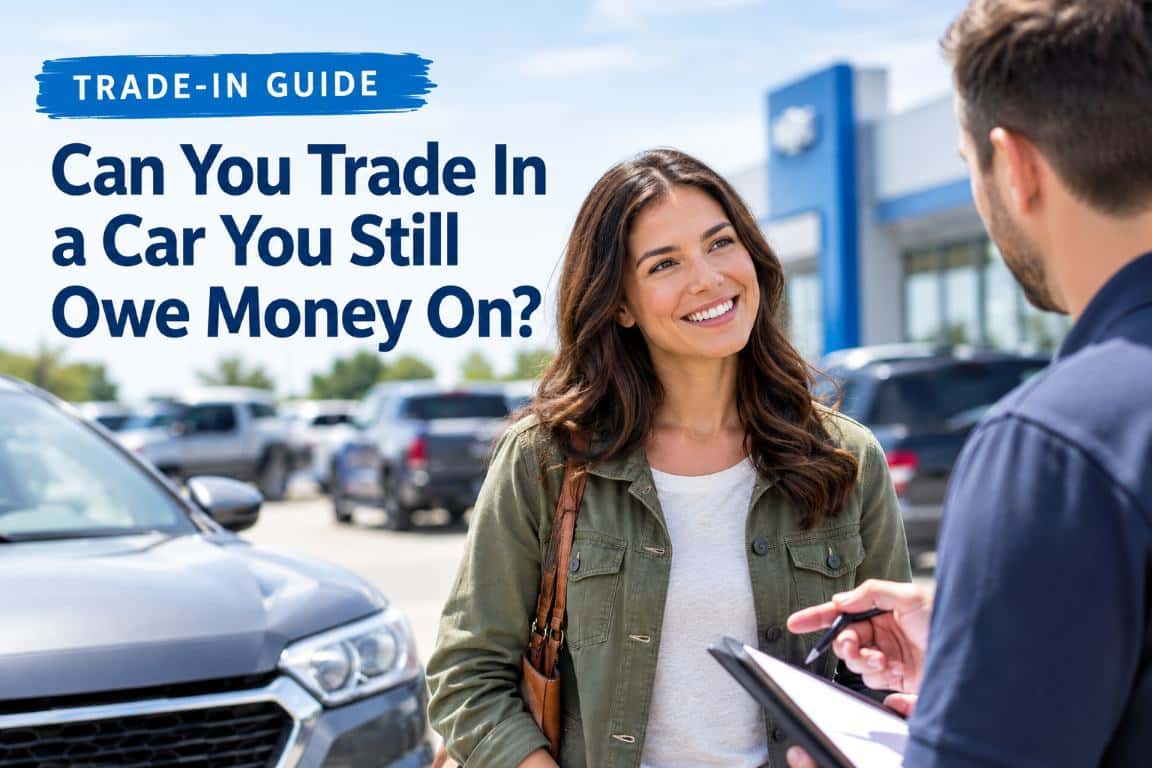
Yes, you can usually trade in a car you still owe money on. The important part is comparing your vehicle’s trade-in value with the amount needed to pay off your current auto loan. That difference tells you whether you have positive equity, negative equity, or are close to breaking even.
Quick Answer
You do not normally have to pay off your car before trading it in. The existing loan payoff is handled as part of the transaction. What matters most is whether the car is worth more or less than the payoff amount.
How Do You Trade In a Car You Still Owe Money On?
When you trade in a financed vehicle, the dealership evaluates the vehicle and determines its trade-in value. Your current lender also provides a payoff amount showing what is required to satisfy the existing loan.
Those two numbers are compared before the trade is completed:
- Trade-in value: What the dealership is offering for your current vehicle.
- Loan payoff: The amount needed to satisfy your current auto loan.
The difference between those numbers determines your equity position.
Positive Equity vs. Negative Equity
| Situation | Example | What It Means |
|---|---|---|
| Positive equity | Trade value: $20,000 Payoff: $16,000 |
You have about $4,000 in equity that may be applied toward your next vehicle. |
| About even | Trade value: $18,000 Payoff: $18,000 |
The trade value is roughly enough to cover the existing payoff. |
| Negative equity | Trade value: $18,000 Payoff: $21,000 |
You owe about $3,000 more than the vehicle’s trade-in value. |
These examples are for illustration only. Your actual trade value and payoff will depend on your vehicle, current loan, lender, and transaction.
What Happens If You Have Positive Equity?
Positive equity means your car is worth more as a trade than the amount you still owe. After the old loan is satisfied, the remaining value may be applied toward the purchase of your next vehicle.
For example, if your trade is valued at $20,000 and your payoff is $16,000, the difference is approximately $4,000. That amount can reduce how much you need to finance on the next vehicle, depending on the rest of the transaction.
What Happens If You Have Negative Equity?
Negative equity means the loan payoff is higher than the vehicle’s trade-in value. You may also hear this described as being “upside down” on the loan.
If you have negative equity, the difference still has to be accounted for. Depending on the transaction and lender requirements, you may be able to pay the difference separately or include some or all of it in the financing for the next vehicle.
Including negative equity in a new loan increases the amount being financed, so it is important to understand the complete numbers before deciding how to proceed.
Do You Need to Pay Off Your Car Before Trading It In?
No, not necessarily. A vehicle can generally be traded while an auto loan is still open. As part of the transaction, the existing lender must receive the amount required to satisfy the loan.
It is helpful to request a current payoff quote from your lender before you shop. Your payoff amount may be different from the balance shown on a recent monthly statement because interest can continue to accrue.
What Should You Know Before You Trade?
Knowing your numbers before you visit the dealership can make the conversation much easier. Start with these items:
- Your current lender’s name and account information
- A current loan payoff quote
- Your vehicle’s current mileage
- Registration and ownership information
- Available maintenance or service records
- An estimate of your vehicle’s trade-in value
Once you know your estimated trade value and payoff, you can see whether you are working with positive or negative equity.
How Can Your Trade Affect the Next Car Payment?
A trade-in can change the amount you need to finance, but it is only one part of the payment calculation. The vehicle price, down payment, loan term, interest rate, taxes, fees, and any remaining negative equity can all affect the final amount financed.
If you want to compare different purchase scenarios, the Dave Says Yes payment calculator lets you enter a vehicle price, trade-in value, down payment, loan term, and interest rate to estimate a payment.
Questions to Ask Before Trading In a Financed Car
Before completing a trade, make sure you understand how the old loan and the new purchase fit together. Useful questions include:
- What is the trade-in value of my current vehicle?
- What is the exact payoff amount on my existing loan?
- Do I have positive or negative equity?
- If I have negative equity, how is that amount being handled?
- How much will I actually be financing on the next vehicle?
- What loan term, interest rate, taxes, fees, and down payment are included in the figures?
Frequently Asked Questions About Trading In a Car You Still Owe Money On
“`
Can I trade in a car if I still have a loan?
Yes. You can generally trade in a financed vehicle before the loan is fully paid off. The existing payoff must be satisfied as part of the transaction.
What if I owe more than my car is worth?
That means you have negative equity. The difference may need to be paid separately or, if the lender and transaction allow it, included in the next loan.
What if my car is worth more than I owe?
You have positive equity. After the existing loan is satisfied, the remaining trade value may be applied toward the next vehicle purchase.
Is my loan balance the same as my payoff amount?
Not always. A current payoff quote is the better number to use because it reflects what the lender requires to satisfy the loan for a particular time period.
Should I know my trade value before shopping for another car?
It can help. Comparing an estimated trade-in value with your current payoff gives you a clearer idea of your equity before you start discussing the next vehicle.
“`
Know Your Trade Value and Payoff Before You Decide
Trading in a car you still owe money on is common, but the numbers matter. Start by finding your current payoff amount and getting an estimate of what your vehicle is worth. From there, you can see whether you have positive or negative equity and understand how the trade may affect your next purchase.
For used-car shoppers in Troy, Dayton, and the surrounding southwest Ohio area, Dave Says Yes can help you review your trade and understand the next steps without relying on payment or approval promises.
0 comment(s) so far on Can You Trade In a Car You Still Owe Money On?