

Does Paying Extra on Your Car Loan Reduce Interest?
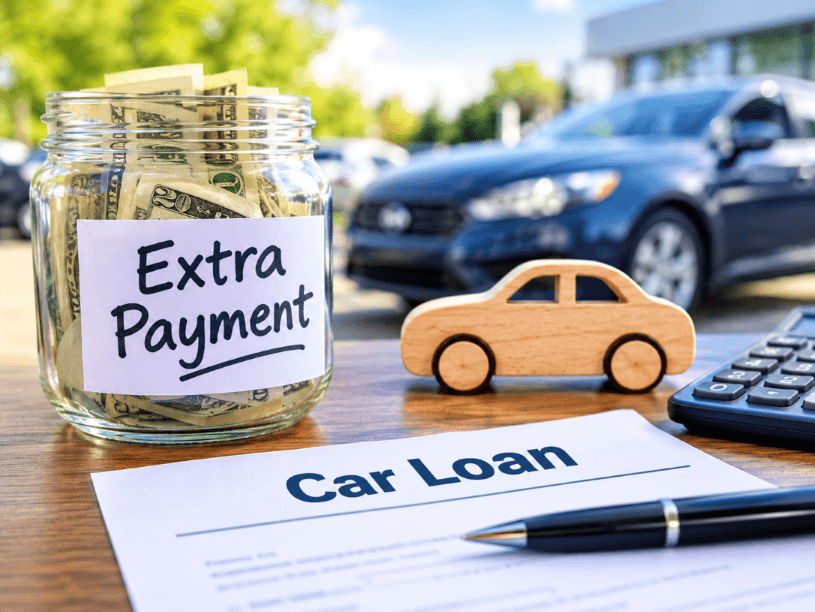
Yes, paying extra on your car loan can reduce the total interest you pay and help you pay off the vehicle sooner. The key is understanding how your lender applies the additional money. On a typical simple-interest auto loan, extra money that reduces your principal balance can also reduce the interest that accrues in the future.
However, the result depends on your loan’s interest calculation, payment instructions, and contract terms. Before sending extra money, check with your lender to make sure you understand how it will be applied.
The quick answer
Extra payments can save interest when they reduce the principal on a loan that calculates interest on the outstanding balance. Ask your lender how to make a principal reduction and whether your contract includes any early-payoff fee.
How Does Paying Extra Reduce Car Loan Interest?
Your car loan payment generally covers two main things: principal and interest.
- Principal: The amount of money you borrowed and still owe.
- Interest: The cost of borrowing that money.
With a simple-interest loan, interest is calculated using your outstanding loan balance. When you reduce that balance sooner, less principal remains for interest to accrue against in the future.
For example, imagine you make your regular monthly payment and then pay an additional amount that your lender applies to principal. Your balance may fall faster than it would with scheduled payments alone. Because the balance is lower, future interest charges may also be lower.
The exact savings depend on your balance, interest rate, payment timing, loan terms, and how the lender processes the extra payment. There is no single savings amount that applies to every borrower.
Make Sure the Extra Payment Goes Toward Principal
Sending more money than your regular payment does not always mean the entire extra amount immediately reduces principal. Your lender may first apply money to fees or interest that is due, then apply the remaining amount to principal. Payment handling can vary by lender and loan agreement.
Before making an additional payment, contact your lender or loan servicer and ask:
- Can I make an additional principal payment?
- How do I designate an extra amount for principal reduction?
- Will an extra payment change my next due date, or will my regular payment still be due?
- Are there any fees or prepayment penalties in my contract?
- How can I confirm that the extra amount reduced my principal balance?
Check your next account statement or online loan balance after the payment posts. If the result is not what you expected, ask the lender to explain how the payment was allocated.
Simple Interest vs. Precomputed Interest
One important detail is how your auto loan calculates interest. Two common methods are simple interest and precomputed interest.
Simple-interest auto loans
With a simple-interest loan, interest is calculated over time based on the outstanding principal balance. The calculation may use a daily or monthly method, depending on the contract.
When an extra payment reduces principal, it can reduce the balance used to calculate future interest. This is why additional principal payments can be helpful on this type of loan.
Precomputed-interest auto loans
With a precomputed-interest loan, the interest due over the scheduled loan term is calculated at the beginning and incorporated into the payment schedule. Paying extra does not reduce the principal and interest owed in the same way it can with a simple-interest loan.
You may be entitled to a refund of some unearned interest if you pay the loan off early, depending on the contract and applicable rules. Ask your lender how an early payoff would be calculated.
The Consumer Financial Protection Bureau explains the difference between these methods in its guide to simple interest and precomputed interest on an auto loan.
Does Paying Extra Lower Your Monthly Car Payment?
Usually, no. Making an extra payment generally helps reduce your balance and may shorten the time it takes to pay off your loan. It does not automatically change the required monthly payment in your original agreement.
For example, if your scheduled payment is $400 per month and you make an additional principal payment, your next required payment will generally still be the scheduled $400. Your lender can explain whether its payment policies offer any different arrangement.
If your main goal is to lower your required monthly payment, ask your lender about your options. Refinancing may be worth exploring in some situations, but approval and terms depend on the lender’s review and your circumstances.
When Does It Make Sense to Pay Extra on a Car Loan?
Paying extra may be worth considering when you have room in your budget and want to reduce your loan balance faster. Before committing additional money, consider your overall financial picture.
- Keep emergency savings available. Avoid using money you may need for essential expenses or unexpected repairs.
- Compare other debts. If you have higher-interest debt, paying that down first may be a better use of extra money.
- Check your loan terms. Understand how interest is calculated and whether early payoff fees apply.
- Make sure regular payments stay current. An extra payment should not cause you to miss a scheduled payment or fall behind on other bills.
There is no requirement to pay extra every month. A one-time additional payment may be an option when your budget allows, while continuing your normal payment schedule.
Use a Payment Calculator to Plan Ahead
If you are shopping for a vehicle or comparing financing scenarios, it helps to understand how the amount financed, interest rate, and loan term affect the payment. The Dave Says Yes payment calculator can help you explore estimated payments using different figures.
Remember that a payment calculator is a planning tool, not a financing offer. Your actual loan terms depend on the details of the transaction and the lender’s review.
If you want to better understand the rate shown on a financing offer, read our guide to APR vs. interest rate on a car loan. You can also visit the Dave Says Yes finance center to learn more about the financing process.
Frequently Asked Questions
Does paying extra on my car loan save interest?
It can. On a simple-interest loan, an extra payment applied to principal can reduce the balance used to calculate future interest. Your actual savings depend on your loan terms and payment timing.
Should I tell my lender I want the extra payment applied to principal?
Yes. Contact your lender to learn how to make a principal-only payment or designate an additional amount for principal reduction. Also ask how the payment will affect your next due date.
Will paying extra lower my required monthly car payment?
Usually not. Extra payments generally reduce the balance and may shorten the payoff period, but your original scheduled monthly payment typically remains the same.
Can I pay off my car loan early?
Your contract and applicable law determine whether an early payoff fee or prepayment penalty applies. Review your loan documents and ask your lender for a payoff quote before paying the loan off.
Make a Car Payment Plan That Fits Your Budget
Paying extra on your car loan can be a useful way to reduce interest and reach your payoff date sooner, especially when your loan uses simple interest and the additional money is applied to principal. The most important step is understanding your loan agreement and confirming how your lender handles extra payments.
At Dave Says Yes, our team takes the time to explain financing terms and help you understand the numbers. You’ll work with one dedicated advisor who gets to know your situation and stays with you through the process. Our goal is to make the vehicle-buying process easier to understand so you can make a decision you’re comfortable with.
0 comment(s) so far on Does Paying Extra on Your Car Loan Reduce Interest?