
APR VS. Interest Rate on a Car Loan: What’s the Difference?
When you’re comparing car loans, you’ll probably see two numbers that look similar: the interest rate and the annual percentage rate (APR). They’re related, but they don’t always mean the same thing.
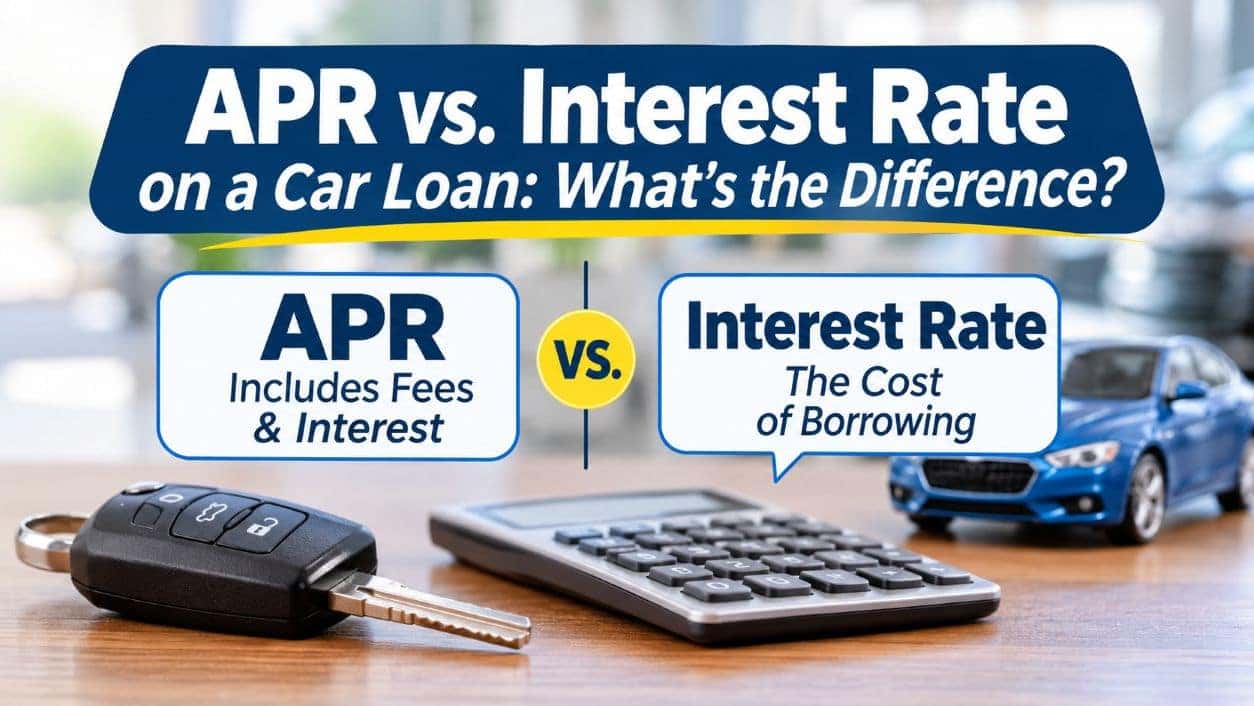
The quick answer: Your interest rate is the cost of borrowing the money. Your APR is a broader measure that includes the interest rate plus certain fees and finance charges associated with the loan. When comparing financing offers, APR is an important number to review—but you should also compare the loan term, amount financed and total amount you’ll pay.
What Is the Interest Rate on a Car Loan?
The interest rate is the percentage a lender charges for borrowing money. It determines how much interest accrues on your outstanding loan balance over time.
For example, if a lender offers you a car loan with a 7% interest rate, that percentage is used to calculate the interest you pay on the amount you borrow. The actual interest paid over the life of the loan also depends on the loan balance, payment schedule and repayment term.
Your interest rate may be influenced by several factors, including your credit history, income, existing debt, the vehicle, the amount financed and the length of the loan. Lenders evaluate applications differently, so the rate one person receives may not be the rate another person receives.
What Is APR on a Car Loan?
APR stands for annual percentage rate. It gives you a broader picture of the yearly cost of borrowing because it includes the interest rate and certain additional finance charges associated with the loan.
That distinction matters because two financing offers could have the same interest rate but different APRs if the costs included in the APR calculation are different.
APR is designed to make it easier to compare the cost of credit. It does not necessarily include every expense connected to buying a vehicle. Taxes, title, registration and other vehicle-purchase costs are generally separate from the loan’s APR calculation.
APR vs. Interest Rate: What’s the Difference?
The simplest way to remember the difference is that the interest rate measures the cost of borrowing, while APR provides a broader annual cost measure that includes certain finance charges.
| Interest Rate | APR |
|---|---|
| Measures the interest charged for borrowing money. | Includes the interest rate plus certain fees and finance charges. |
| Does not include other loan finance charges in the same way APR does. | Provides a broader measure of the cost of credit. |
| Useful for understanding the interest charged on the loan. | Especially useful when comparing similar financing offers. |
APR is often higher than the interest rate when additional finance charges are included. However, the two numbers can be the same or very close when there are few or no additional charges included in the APR calculation.
Why APR Matters When Comparing Car Loans
Imagine you’re reviewing two financing offers. Both show the same interest rate, but one has a higher APR. That difference may indicate that the financing includes additional charges that affect the overall cost of borrowing.
Looking at APR can help you spot that difference. Still, don’t make your decision based on one number alone. Compare offers using the same amount financed and a similar loan term whenever possible.
Before choosing a loan, review:
- APR: The broader annual cost measure, including certain finance charges.
- Interest rate: The rate used to calculate interest on the loan balance.
- Amount financed: How much you’re borrowing.
- Loan term: How many months you’ll have to repay the loan.
- Finance charge: The dollar amount you’ll pay in interest and applicable finance charges over the loan term.
- Total of payments: The total scheduled amount you’ll pay over the life of the loan.
These details help you understand more than just the monthly payment. A longer loan term, for example, may reduce the monthly payment but can increase the total interest paid over time.
Does a Lower APR Always Mean a Better Car Loan?
A lower APR can be a good sign when you’re comparing loans with similar terms and the same amount financed. But it doesn’t automatically mean that offer is the best choice for your situation.
Consider two offers with different loan lengths. The loan with the lower monthly payment may have a longer repayment period. That can mean paying interest for more months, even if the payment initially looks more comfortable.
Look at the complete loan disclosure before making a decision. Pay attention to the APR, amount financed, finance charge, payment schedule and total of payments. Make sure you understand any fees or optional products included in the transaction.
You can also use the Dave Says Yes payment calculator to explore how vehicle price, interest rate, loan term, down payment and trade-in value can affect an estimated payment. A calculator is a planning tool, not a loan offer or guarantee of financing terms.
Where Can You Find Your APR and Interest Rate?
When you receive a financing offer, review the Truth in Lending disclosures. These documents provide important details about the cost and terms of the loan.
Depending on the disclosure, you should be able to identify information such as:
- Annual percentage rate (APR)
- Finance charge
- Amount financed
- Total of payments
- Payment amount and schedule
Take time to review the figures and ask questions about anything you don’t understand. You should know what you’re agreeing to before signing a loan contract.
Get Help Understanding Your Used-Car Financing Options
Comparing car loans can feel complicated, especially when you’re looking at more than one lender or financing offer. At Dave Says Yes, you’ll work with one dedicated advisor who gets to know your situation and stays with you through the process.
Our team can help explain the financing details, walk through the terms being offered and answer questions so you can make a decision you’re comfortable with. You can learn more about the Dave Says Yes finance process or review our auto finance terminology guide for explanations of common loan terms.
Whether you’re just starting to shop or already comparing offers, focus on the complete cost of the loan—not just the monthly payment or the interest rate.
Frequently Asked Questions
Is APR usually higher than the interest rate on a car loan?
APR is often higher when certain additional finance charges are included in its calculation. If there are no additional charges included, APR and the interest rate may be the same or very close.
Should I compare APR or interest rate when shopping for a car loan?
Compare APR when reviewing similar financing offers because it includes the interest rate and certain finance charges. Also compare the amount financed, loan term, finance charge and total of payments.
Can two car loans have the same interest rate but different APRs?
Yes. If the loans have different finance charges included in the APR calculation, they can have the same interest rate but different APRs.
Does APR include taxes and vehicle registration fees?
Not generally. APR includes the interest rate and certain credit-related finance charges. Taxes, title and registration costs are generally separate vehicle-purchase expenses.
Does a lower APR mean I’ll have a lower monthly payment?
Not necessarily. Your monthly payment also depends on the amount financed and loan term. Compare the full loan terms rather than relying on APR or payment alone.
Ready to explore your options? Browse our used vehicles, start a financing application or talk with a Dave Says Yes credit expert about your questions.
0 comment(s) so far on APR VS. Interest Rate on a Car Loan: What’s the Difference?