What Should You Ask Before Buying a Used car?
Before buying a used car, ask about its history, maintenance, current condition, inspection results, total purchase price, and any available warranty coverage. Getting clear answers—and checking the details yourself—can help you make a more informed decision and avoid surprises after you drive away.
Whether you’re shopping for your first vehicle or replacing your current car, use these questions to guide your conversation with the seller and evaluate the specific vehicle you’re considering.
1. What Is the Vehicle’s History?
A vehicle’s history can help you understand its background, but no single report tells the whole story. Ask:
- Is a vehicle history report available?
- Does the report show any reported accidents or damage?
- Are there title concerns or inconsistencies in the recorded mileage?
- How many previous owners are listed, if that information is available?
- Are maintenance or service records available?
Review the available report carefully and compare it with the seller’s answers. A report may not include every accident, repair, or maintenance visit, so it should be one part of your evaluation—not a guarantee that the vehicle has no problems.
Learn more in our guide to understanding CARFAX vehicle history reports.
2. How Has the Car Been Maintained?
Maintenance history can provide useful clues about how a vehicle was cared for. Ask whether service records are available and whether any major maintenance or repairs have been completed.
Useful questions include:
- Are oil changes and routine maintenance documented?
- Have any major components been repaired or replaced?
- Are any maintenance items currently due?
- Are there known mechanical concerns that need attention?
- Are service records available to review?
If records are incomplete, that does not automatically mean the car is a poor choice. It does mean you may need additional information or a professional inspection before deciding.
3. What Should I Look for During an Inspection?
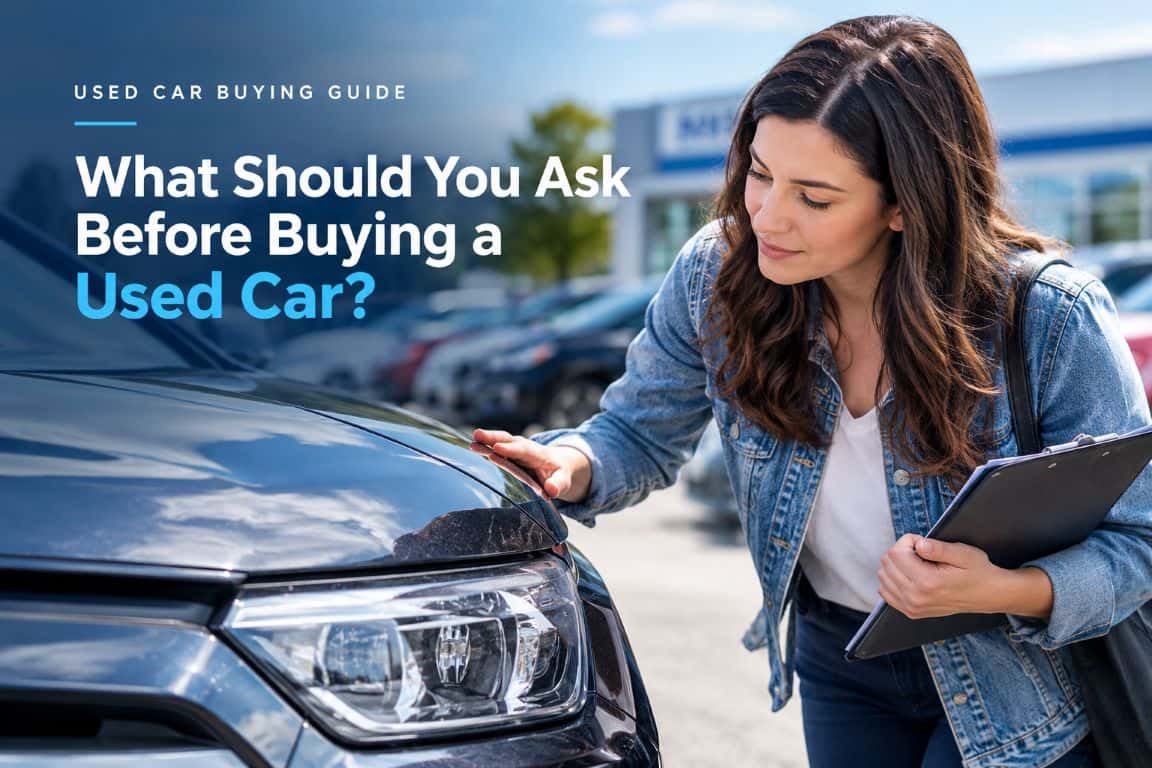
Take time to examine the vehicle inside and out. Ask the seller to explain any visible damage, unusual wear, warning lights, or other concerns you notice.
During your walk-around, check:
- Exterior: Look for rust, uneven paint, body damage, or signs of previous repairs.
- Tires: Check tread wear and look for uneven wear that may need further investigation.
- Interior: Test the windows, locks, lights, air conditioning, heat, and infotainment features.
- Under the hood: Look for visible leaks, corrosion, or signs of neglect.
- Dashboard: Ask about warning lights or alerts that appear when the vehicle is started.
Consider arranging an independent pre-purchase inspection with a qualified mechanic. A mechanic may identify concerns that are difficult to spot during a walk-around or short test drive.
For more details, see our guide to used vehicle inspection tips.
4. Can I Take It for a Test Drive?
A test drive lets you evaluate how the vehicle feels and performs in everyday driving conditions. Before you leave, confirm that the test drive is permitted and that any required arrangements are complete.
During the drive, pay attention to:
- How the engine starts and accelerates.
- Whether the transmission shifts smoothly.
- How the steering and brakes respond.
- Unusual knocking, squealing, rattling, or other sounds.
- Warning lights or unexpected behavior.
- Whether the seats, visibility, controls, and passenger space suit your needs.
Ask about anything that feels or sounds unusual. If a concern cannot be explained clearly, consider having the vehicle checked by a qualified mechanic before making a decision.
5. What Is the Total Purchase Price?
The advertised price is only one part of the amount you may pay. Before agreeing to buy, request an itemized breakdown of the transaction.
Ask:
- What is the vehicle’s selling price?
- Which taxes, title costs, registration charges, and dealer fees apply?
- Are any optional products or services included in the proposed transaction?
- Can I review the full purchase total before signing?
Also consider ongoing expenses such as insurance, fuel, routine maintenance, and potential repairs. A vehicle that fits your purchase budget should also make sense for your broader monthly expenses.
6. What Should I Ask About Financing?
If you plan to finance your used car, make sure you understand the complete loan offer—not just the monthly payment.
Questions to ask include:
- What annual percentage rate (APR) and loan term are being offered?
- How much would I need to put down?
- What would the scheduled payment be?
- What is the total amount I would pay over the loan term?
- Are there optional products or other costs included in the offer?
- What documents do I need to provide?
Financing terms depend on the lender, applicant, vehicle, and transaction. Ask a credit expert to explain any part of the offer you do not understand before you agree to it.
Visit the Dave Says Yes finance center to learn about available financing options.
7. Is Any Warranty or Protection Coverage Included?
Do not assume every used vehicle comes with the same warranty or protection coverage. Ask what, if anything, applies to the specific vehicle and request the details in writing.
- Is any warranty coverage included with this vehicle?
- When does the coverage begin and end?
- Which components or repairs are covered, and what exclusions apply?
- Are optional protection products available, and what do they cost?
- Where can I review the terms before deciding?
Read the actual coverage documents and make sure you understand the limitations, deductibles, and responsibilities that may apply. If no coverage is included, factor possible repair costs into your decision.
8. What Should I Confirm Before Signing?
Before finalizing the purchase, take a moment to check that the paperwork matches what you have discussed.
- Confirm the vehicle’s identity, mileage, and agreed selling price.
- Review the itemized purchase total and all applicable fees.
- Read the financing terms, if applicable.
- Confirm any warranty or optional product terms in writing.
- Ask for clarification on any document or charge you do not understand.
- Make sure you have the paperwork and contact information you need after the sale.
Take the time you need to understand the agreement. If something differs from what you were told, ask for an explanation before signing.
Quick Checklist: Questions to Ask Before Buying a Used Car
- Can I review the vehicle history report?
- Are maintenance and repair records available?
- Are there any known mechanical issues or warning lights?
- Can I take the vehicle for a test drive?
- Can I arrange an independent inspection?
- What is the complete purchase price, including applicable fees?
- What are the APR, loan term, down payment, and total financing cost?
- Is any warranty coverage included, and what does it cover?
- Can I review all paperwork before signing?
Frequently Asked Questions
What is the most important question to ask when buying a used car?
Start by asking about the vehicle’s history, maintenance, and known issues. Then verify the answers through available records, a careful inspection, and a test drive. No single question can establish the vehicle’s overall condition.
Should I get a used car inspected before buying it?
An independent pre-purchase inspection can help identify mechanical or safety concerns that may not be obvious during a walk-around or test drive. Ask the seller about inspection arrangements and have a qualified mechanic evaluate any concerns.
Is a vehicle history report enough to know if a used car is reliable?
No. A history report can provide useful information, but it may not include every accident, repair, or service visit. Review the report alongside maintenance records, the vehicle’s condition, a test drive, and an independent inspection when appropriate.
What should I review before signing used-car financing paperwork?
Review the APR, loan term, down payment, scheduled payment, total amount paid over the loan term, applicable fees, and any optional products. Ask the finance team to explain anything you do not understand before agreeing to the terms.
Find a Used Car That Fits Your Needs
The right used car is about more than its price or mileage. Review its history, evaluate its condition, ask direct questions, and make sure the total cost fits your budget before you decide.
At Dave Says Yes in Troy, Ohio, you can explore available used vehicles and speak with the team about vehicle details and financing questions. Availability and financing terms vary, so confirm the details of the specific vehicle and transaction before moving forward.
“`
0 comment(s) so far on What Should You Ask Before Buying a Used car?