

What Is Negative Equity on a Car Loan?
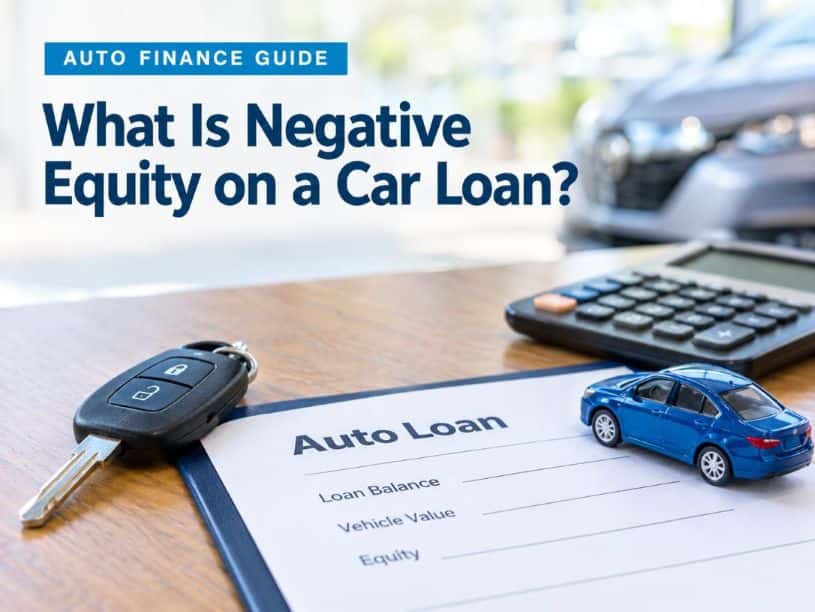
Negative equity on a car loan means you owe more on your vehicle than the vehicle is currently worth. You may also hear this called being upside down or underwater on your auto loan.
Quick answer
If your car is worth $15,000 but your loan payoff is $18,000, you have approximately $3,000 in negative equity. That difference matters most when you want to sell or trade the vehicle because the car’s value may not be enough to pay off the remaining loan balance.
How Does Negative Equity Work?
Your car has a current market or trade-in value, while your auto loan has a remaining payoff amount. When the payoff amount is higher than the vehicle’s value, the difference is negative equity.
For example, suppose your lender’s payoff amount is $22,000 and your vehicle is worth $18,000 as a trade-in. You would have about $4,000 in negative equity.
The basic calculation is:
Loan payoff amount − vehicle value = negative equity
How Can You Tell If You Have Negative Equity?
Start by getting the current payoff amount from your lender. The payoff amount can be different from the balance shown on a recent statement because it reflects the amount needed to satisfy the loan as of a particular date.
Next, find out what your vehicle is currently worth. A trade-in value is different from a private-party selling price, so use a valuation that matches what you are actually planning to do with the vehicle.
You can use the Dave Says Yes trade-value tool to begin the valuation process, then compare that information with your current loan payoff.
What Causes Negative Equity on a Car Loan?
Negative equity can happen when a vehicle loses value faster than the loan balance is being reduced. Several factors can contribute to that situation.
- A small or no down payment can leave less equity in the vehicle when the loan begins.
- Longer loan terms can mean the balance takes more time to decline.
- Vehicle depreciation can reduce the car’s value while you are still making payments.
- Rolling an existing loan balance into another vehicle can carry negative equity forward.
- Taxes, fees, financed products, or other amounts added to the loan can increase the amount financed.
What Happens If You Trade In a Car With Negative Equity?
You may still be able to trade in a vehicle with negative equity, but the difference between the loan payoff and the vehicle’s trade value has to be addressed.
For example, if you owe $20,000 and the vehicle is worth $16,000, there is a $4,000 gap. Depending on the transaction and financing approval, that gap may need to be paid separately or may be included in the financing for the next vehicle.
If negative equity is included in a new loan, the amount being financed is higher than the price of the replacement vehicle alone. That can affect the amount financed, monthly payment, and total amount paid over the life of the loan.
Why Negative Equity Matters
Negative equity is not simply a number on a loan statement. It represents a gap between your debt and the value of the vehicle securing that debt.
That gap can become especially important if you want to sell or trade the vehicle, because the vehicle’s value may not be enough to satisfy the loan payoff.
It can also be useful to understand your equity before shopping for another vehicle. Knowing your payoff amount and estimated trade value gives you a clearer picture of where you stand before discussing another loan.
How Can You Reduce Negative Equity?
There is no single solution that works for every borrower. The appropriate approach depends on your loan, vehicle value, budget, and plans for the vehicle.
- Keep making payments. As the loan balance declines, the gap may become smaller.
- Pay additional principal when appropriate. Extra payments can reduce the balance faster, subject to your loan terms.
- Keep the vehicle longer. If you do not need to replace the vehicle immediately, continuing the existing loan may give you more time to reduce the balance.
- Know your numbers before trading. Compare your current payoff with an accurate estimate of your vehicle’s value before deciding what to do next.
If you are considering another vehicle, the Dave Says Yes payment calculator can help you explore how vehicle price, down payment, trade-in value, interest rate, and loan term can affect an estimated payment.
Frequently Asked Questions About Negative Equity
Is negative equity the same as being upside down on a car loan?
Yes. These terms generally describe the same situation: you owe more on the vehicle than it is currently worth.
Can I trade in a car with negative equity?
Potentially. The negative-equity difference still has to be addressed, either through money paid separately or, when permitted by the lender and transaction, through the financing of the replacement vehicle.
How do I calculate my negative equity?
Get your current loan payoff amount and subtract your vehicle’s current value. If the payoff is higher than the vehicle’s value, the difference represents your approximate negative equity.
Does negative equity go away?
It can decrease as you pay down the loan or as the vehicle’s value changes. The important number to watch is the difference between what you owe and what the vehicle is worth.
Know Your Numbers Before Your Next Car Decision
Negative equity simply means the amount you owe is greater than the value of your vehicle. Once you know your loan payoff and current vehicle value, you can see the size of the gap and make a more informed decision about keeping, selling, or trading your car.
If you are considering a trade, start by finding out what your current vehicle may be worth and reviewing the numbers before choosing your next step.
“`
0 comment(s) so far on What Is Negative Equity on a Car Loan?