
What Does “Out-the-Door Price” Mean When Buying a Used Car
Used-Car Buying Guide
When you shop for a used car, the advertised price is an important starting point—but it may not tell you the full amount needed to complete the purchase. That is where the out-the-door price comes in. It is the complete purchase total after applicable taxes and fees are accounted for, giving you a clearer number to review before you agree to buy.
Understanding this number can help you compare vehicles, plan your budget, and avoid confusion when it is time to review the paperwork.
What Does Out-the-Door Price Mean?
The out-the-door price is the total purchase price of a vehicle, including the selling price and applicable charges needed to complete the transaction. Buyers often use the abbreviation OTD when asking a dealership for this figure.
Think of it as the complete price to purchase the vehicle before considering separate loan interest that may accrue over time. It helps answer a practical question: How much does this vehicle cost to buy, not just what number appears in the listing?
A useful out-the-door quote should identify the individual charges rather than provide one unexplained total. That way, you can see what makes up the price and ask questions about anything you do not recognize.
What Is Included in an Out-the-Door Price?
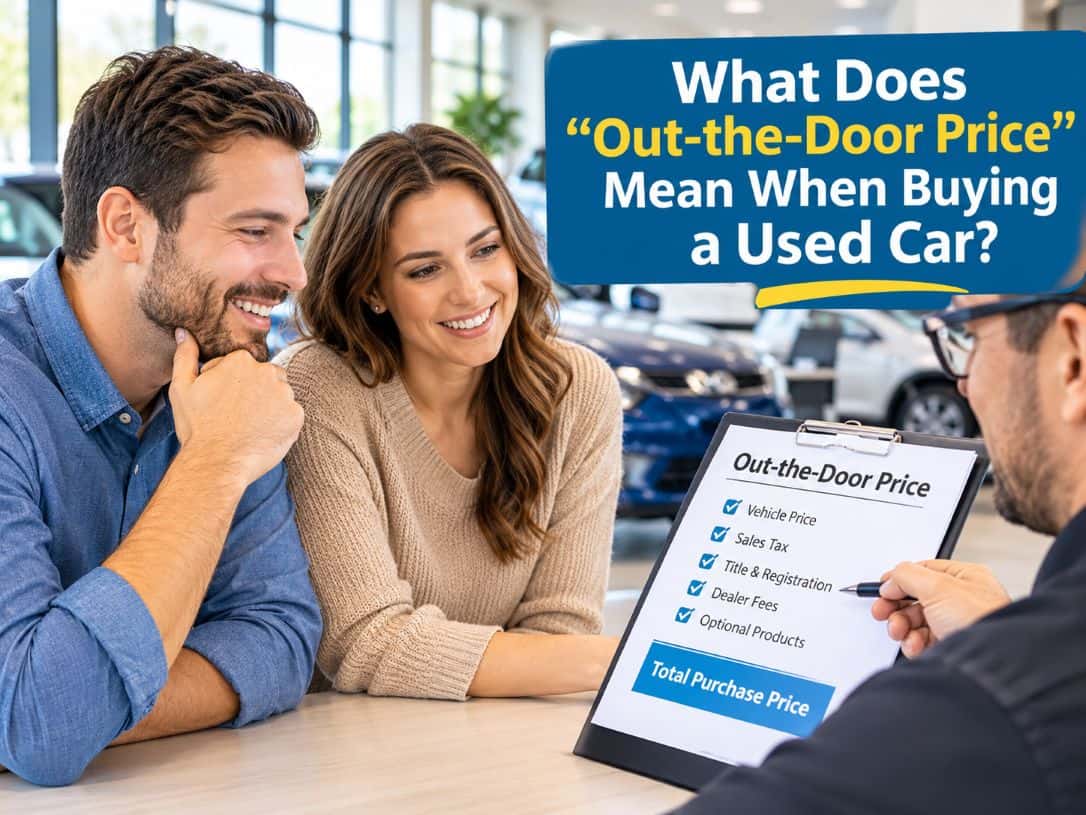
The exact breakdown depends on the vehicle, transaction, and applicable fees. A typical itemized purchase quote may include:
- Vehicle selling price: The agreed price of the used car before applicable taxes and other charges.
- Sales tax: Applicable vehicle sales tax based on the transaction and registration details.
- Title and registration: Applicable costs associated with transferring ownership and registering the vehicle.
- License and government fees: Other required charges that apply to the purchase.
- Dealer fees: Any applicable dealership charges. Check whether a fee is already included in the advertised price so it is not counted twice.
- Optional products: Any protection plans, warranties, or other products you choose to purchase.
Do not assume every dealership lists or calculates these items the same way. Read the specific vehicle’s pricing disclosure and ask for clarification if you are unsure whether a charge is included or separate.
Advertised Price vs. Out-the-Door Price
The advertised price is the amount displayed in a vehicle listing. The out-the-door price is the complete purchase total after applicable charges are included.
For example, imagine a used vehicle is listed for $18,000. That listing price alone does not tell you the final purchase total if applicable taxes and government fees are still separate. You need an itemized quote to understand the full amount.
At Dave Says Yes, current pricing disclosures identify which charges are included in the displayed sale price and which government charges may be additional. For example, the payment calculator’s current disclosure says the price includes a $398 documentation fee but excludes applicable tax, title, license, registration, and other government fees, if applicable. Always review the disclosure on the specific vehicle you are considering because pricing information can change.
You can browse current used-car inventory and review the pricing details on individual listings.
How to Ask a Dealership for the Out-the-Door Price
You do not need special terminology to request a complete purchase quote. Ask for the total in writing and request a breakdown of each charge.
A simple question to ask
“Can you provide the complete out-the-door price for this specific vehicle, with the selling price, applicable taxes, title and registration costs, dealer fees, and any optional products itemized? Please show which charges are already included in the advertised price.”
A written breakdown makes it easier to review the numbers at your own pace. It also gives you something specific to compare if you are considering more than one vehicle.
Before moving forward, check that:
- The quote identifies the exact vehicle you are considering.
- The advertised selling price matches the listing or agreed price.
- Applicable taxes and government fees are clearly identified.
- Dealer fees are explained and not counted twice.
- Optional products are listed separately so you can decide whether you want them.
- The final paperwork matches the price and products you agreed to.
Is the Out-the-Door Price the Same as Your Monthly Payment?
No. The out-the-door price describes the vehicle purchase total. Your monthly payment is determined by the amount financed, annual percentage rate (APR), loan term, and other details of the financing agreement.
Your down payment and trade-in can affect how much you need to finance. If you owe money on your trade, the remaining loan balance can also affect the transaction. These amounts should be shown clearly rather than used to obscure the vehicle’s purchase price.
Loan interest is another separate consideration. Two buyers could purchase vehicles at the same out-the-door price but pay different amounts over time because their financing terms are different.
If you are considering a trade, you can start with the Dave Says Yes trade-in tool. If you plan to finance, the payment calculator can help you explore estimated payment scenarios. Estimates are not a financing offer or guarantee of specific terms.
You can also visit the Dave Says Yes finance center to learn about the financing process and discuss your options.
Why the Out-the-Door Price Matters When Buying Used
Focusing on the complete purchase price helps you make a more informed comparison. A vehicle with a lower advertised price is not automatically the less expensive purchase once all applicable charges are considered.
It also helps you keep the vehicle purchase and financing discussions separate. First understand what you are buying and the full purchase total. Then review the APR, loan term, payment, and total financing cost before deciding whether the arrangement fits your budget.
At Dave Says Yes, our Upfront Pricing approach means you’ll know the vehicle price upfront. We’ll also walk you through the financing terms so you can make a decision you’re comfortable with.
Frequently Asked Questions About Out-the-Door Price
Does the out-the-door price include sales tax?
Yes. A complete out-the-door purchase quote should account for applicable sales tax along with other charges needed to complete the purchase. Ask for the tax amount to be shown separately in the itemized breakdown.
Does the out-the-door price include dealer fees?
It should account for applicable dealer charges, but a fee may already be included in the advertised price. Review the vehicle’s pricing disclosure and ask the dealership to identify each charge so nothing is counted twice.
Is the out-the-door price the amount I will finance?
Not necessarily. Your down payment, trade-in equity, remaining trade-in loan balance, and optional products can affect the amount financed. Loan interest also affects what you pay over time. Review the purchase total and financing agreement separately.
Should I get the out-the-door price in writing?
Yes. A written, itemized quote gives you a clear record of the vehicle price and applicable charges. Review it against the final paperwork before signing and ask about any differences.
Get Clear on the Full Price Before You Buy
Knowing the out-the-door price helps you compare used vehicles with a clearer understanding of what each purchase involves. Ask for an itemized total, review the charges, and keep the vehicle purchase price separate from your financing terms.
When you are ready to explore your options, browse the current inventory or talk with the Dave Says Yes team in Troy, Ohio. We can help you review vehicle pricing and understand the financing details before you make a decision.
0 comment(s) so far on What Does “Out-the-Door Price” Mean When Buying a Used Car