
How Much Should You Put Down on a Used Car?
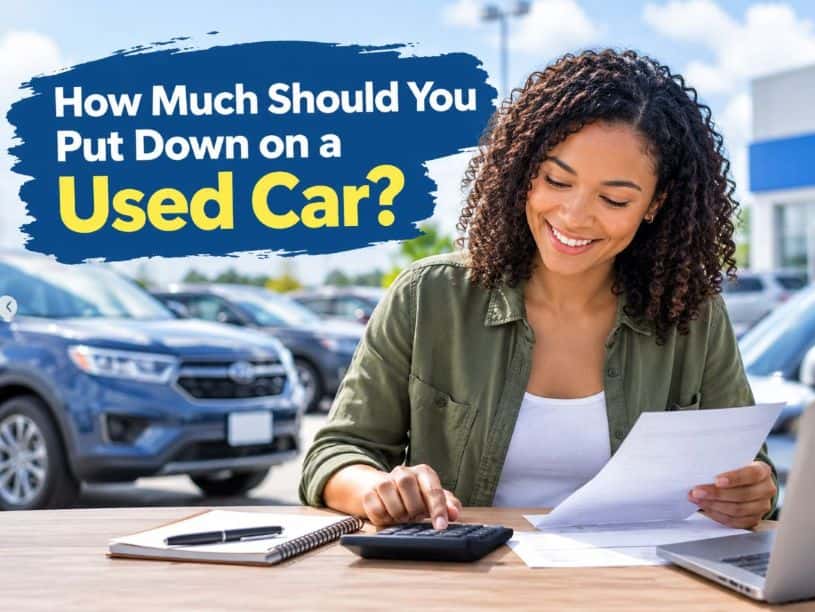
How much should you put down on a used car? There is no single dollar amount that works for every buyer. A down payment should be large enough to make the purchase and monthly payment comfortable without using so much of your cash that you leave yourself financially stretched.
For many used-car shoppers, 10% is a reasonable starting point to consider, but it is not a requirement or a universal rule. Your ideal amount depends on the vehicle price, your budget, trade-in equity, financing terms, and how much cash you can comfortably put toward the purchase.
The short answer: Put down an amount that reduces what you need to finance while still leaving enough money for your emergency savings and other expenses. A bigger down payment can lower the amount financed, but bigger is not automatically better if it leaves you without a financial cushion.
If you are shopping for a used vehicle in Troy, Dayton, or southwest Ohio, it helps to decide on your down-payment strategy before you fall in love with a particular vehicle. That gives you a clearer idea of what price range fits your budget.
Is 10% a Good Down Payment on a Used Car?
It can be a useful starting point, but 10% should not be treated as a rule. Your financial situation matters more than hitting a specific percentage.
For example, if a used vehicle costs $20,000, different down-payment amounts would look like this:
| Down Payment | Amount on a $20,000 Vehicle | General Effect |
|---|---|---|
| 5% | $1,000 | More money remains in savings, but you finance more. |
| 10% | $2,000 | A common starting point for budgeting a down payment. |
| 15% | $3,000 | Reduces the amount financed further. |
| 20% | $4,000 | Can substantially reduce the amount financed, if affordable. |
These examples show the math, not a recommendation that every buyer should put down a specific percentage. The right amount is the one that makes sense alongside the rest of your budget and financing situation.
What Does a Down Payment Do?
A down payment is money you put toward the vehicle purchase rather than financing that portion through the auto loan. If you buy a $20,000 vehicle and put $3,000 down, you are starting with $3,000 paid toward the purchase and a smaller amount left to finance, before taxes, fees, trade-in amounts, and other transaction details.
A larger down payment can have several potential benefits:
- You finance less. A larger upfront payment reduces the amount borrowed.
- Your monthly payment may be lower. Financing less generally reduces the payment when the other loan terms stay the same.
- You may pay less interest overall. Borrowing less can reduce the amount of interest paid over the life of the loan, depending on the loan terms.
- You start with more equity in the vehicle. A larger initial payment means less of the purchase price is being financed.
Should You Put More Money Down?
Not necessarily. A bigger down payment can improve the financing math, but you should not drain your savings simply to reach a higher percentage.
Suppose you have $5,000 available and are considering putting all $5,000 toward a vehicle. That may reduce the amount financed, but it also leaves you with no cash reserve for an unexpected repair, insurance expense, household bill, or other financial need.
A better approach is to look at the entire picture. Ask yourself:
- How much cash can I comfortably use without emptying my savings?
- What monthly payment fits my normal budget?
- How much will insurance, fuel, maintenance, and repairs add to the monthly cost?
- Am I expecting other large expenses soon?
- Would a less expensive vehicle accomplish the same goal?
How Does a Down Payment Affect Your Car Payment?
In general, putting more money down means financing less. If the vehicle price and other loan terms stay the same, financing less can reduce the monthly payment.
The actual payment depends on more than your down payment, though. Vehicle price, trade-in value, loan term, interest rate, taxes, fees, and any amount carried into the new loan can all affect the final amount financed and payment.
That is why it is useful to compare several scenarios rather than choosing a down payment based on a percentage alone. Try different amounts with the
Dave Says Yes Payment Calculator
to see how changing the down payment could affect an estimated payment.
What If You Have a Trade-In?
Your trade-in can also affect how much you need to finance. If you have equity in your current vehicle, that equity may reduce the amount needed for your next purchase.
Before you make a decision, get a realistic idea of what your current vehicle may be worth. You can start with the
Dave Says Yes Value Your Trade
tool.
If you still owe money on the trade, the situation can be different. Your current loan payoff and the vehicle’s value determine whether you have positive equity, negative equity, or are approximately even. Make sure you understand those numbers before deciding how much additional cash to put toward your next vehicle.
How Much Should You Put Down If Money Is Tight?
If saving a large down payment would delay your purchase for months or leave you without an emergency cushion, do not assume you have to reach 20% or another arbitrary target.
Start with the vehicle price you can realistically afford. Then look at the financing options available to you and determine whether the resulting payment fits your budget. Dave Says Yes notes that a lender may require a down payment in some situations, while buyers may also choose to put money down to reduce the monthly payment.
If you are unsure what financing options may be available, you can review the
Dave Says Yes Finance Department
or
apply for financing online.
A Simple Way to Choose Your Down Payment
Instead of asking only, “What percentage should I put down?” work through these four steps:
- Set your vehicle budget. Decide what purchase price and monthly ownership cost make sense for your household.
- Protect your cash cushion. Do not use every dollar you have simply to increase the down payment.
- Consider your trade. Know your vehicle’s estimated value and current payoff if you are trading in a financed vehicle.
- Compare payment scenarios. Test different down-payment amounts, vehicle prices, and loan terms before settling on a number.
The goal is not the biggest down payment
The goal is a vehicle purchase that fits your budget. If 10% works comfortably, that can be a useful starting point. If you can comfortably put down more without sacrificing your financial cushion, that may reduce the amount you finance. If you have less available, focus on finding a vehicle and financing arrangement that still makes sense for your situation.
Shop With Your Budget in Mind
Once you know how much you are comfortable putting down, shop for a vehicle that fits the rest of your budget—not just the largest vehicle payment you think you can handle.
You can
browse current used vehicles at Dave Says Yes
and compare cars, trucks, SUVs, and vans. Inventory, prices, mileage, equipment, and availability change, so review the details of the specific vehicle you are considering.
Frequently Asked Questions About Used-Car Down Payments
Is 10% enough for a used car down payment?
Ten percent can be a reasonable starting point for planning, but it is not a universal requirement. The right amount depends on your budget, the vehicle, your trade-in, and the financing terms available to you.
Is it better to put 20% down on a used car?
A 20% down payment reduces the amount you finance more than a smaller down payment, which can reduce the payment when other terms remain the same. However, putting 20% down is not automatically the best choice if doing so would leave you without enough cash for other financial needs.
Does a bigger down payment lower your monthly payment?
Generally, yes. Financing a smaller amount generally produces a lower payment when the vehicle price, interest rate, loan term, and other factors remain the same. Your actual payment will depend on the complete financing transaction.
Do you have to put money down on a used car?
Not every buyer will have the same down-payment requirement. A lender may require a down payment in some situations, while a buyer may choose to put money down to reduce the amount financed and potentially lower the payment.
Should I use my savings for a large down payment?
Consider the rest of your financial picture first. A large down payment can reduce the amount financed, but using all of your available cash can leave you less prepared for unexpected expenses. The best amount is one that helps with the purchase without creating a new financial strain.
Ready to See What Fits Your Budget?
Compare current used vehicles, estimate your payment, and explore financing options before you make your decision.
0 comment(s) so far on How Much Should You Put Down on a Used Car?