How Much Car Can I Afford?
Used-Car Buying Guide
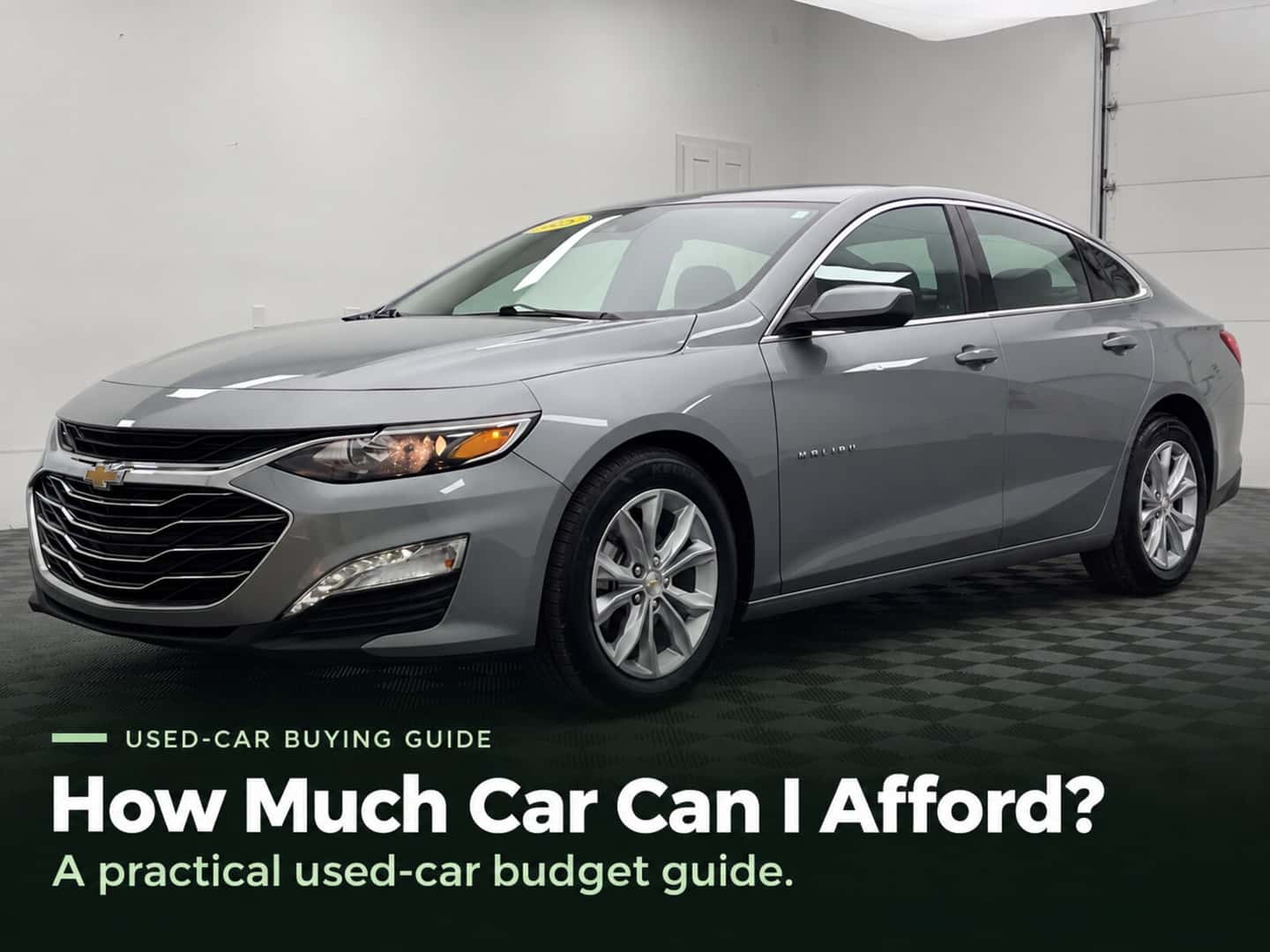
The right car budget is not simply the biggest monthly payment a lender may offer. It is the amount that lets you cover the full cost of owning a vehicle—without putting pressure on the rest of your life. Before you shop, look at your payment, down payment, insurance, fuel, maintenance, and the money you still need for everyday priorities.
Quick answer: start with the total monthly cost
Choose a used vehicle whose estimated payment and ownership costs fit comfortably in your monthly budget. A lower vehicle price, a larger down payment, a shorter loan term, or a lower-cost-to-own vehicle can each make that goal easier to reach.
Begin with your monthly spending plan
Start with your take-home pay, then subtract the expenses that happen every month: housing, utilities, groceries, childcare, debt payments, savings, and other regular commitments. What remains is not automatically your car budget. Leave room for unexpected expenses and for goals that matter to you.
A comfortable vehicle payment should leave enough breathing room that a repair, medical bill, or change in a utility bill does not turn the vehicle into a financial burden. If a payment feels tight before you even buy the car, it will likely feel tighter later.
Look beyond the monthly payment
A monthly payment matters, but it is only one part of the ownership cost. Use this checklist to build a more realistic picture before narrowing your vehicle search.
| Cost to plan for | Why it matters |
|---|---|
| Vehicle payment | Your payment depends on the vehicle price, down payment, trade-in value, loan term, APR, and any amount still owed on a trade. |
| Insurance | Rates can vary by driver, vehicle, coverage, and location. Ask your insurer for a quote before making a final decision. |
| Fuel and charging | Think about your real commute, school runs, weekend miles, and the fuel or charging costs that come with them. |
| Maintenance and repairs | Every used vehicle will need routine service. Set aside room in your budget for oil changes, tires, brakes, and unexpected repairs. |
| Taxes, title, and registration | These are real purchase and ownership costs, so make sure they are part of your planning conversation. |
Use your down payment and trade-in wisely
A down payment can reduce the amount you finance, which may lower your monthly payment and the overall interest paid over the life of the loan. A trade-in can have a similar effect. If you are considering a trade, start by getting an estimate through our trade-in value tool.
Avoid using every dollar you have available for a down payment. Keeping a reasonable emergency cushion is usually more helpful than stretching to reach a specific vehicle price.
A longer loan can lower the payment—but consider the full picture
Loan length has a major effect on your payment. A longer term can make the monthly number smaller, while a shorter term can mean a higher payment but less interest paid over time. Neither is automatically right for every buyer. The better choice is the one that keeps the payment manageable while still making sense for the vehicle, your budget, and your long-term plans.
Before you focus on a payment target alone, compare the amount financed, the loan term, and the total of scheduled payments. The payment calculator is a useful place to test different down-payment and term scenarios.
Choose the vehicle that fits your life, not just your payment
A less expensive vehicle is not always the best value if it does not suit your daily needs. Think about passenger room, cargo space, weather, commute distance, fuel economy, safety features, and how long you expect to keep the vehicle. The right fit can help you avoid buying again too soon.
Once you know your comfortable range, browse vehicles in that range instead of stretching toward a higher price point. Dave Says Yes offers a selection of used cars, trucks, SUVs, and vans so you can compare options that match your needs.
Frequently Asked Questions About Used-Car Budgets
How do I know whether a car payment is too high?
A payment may be too high if it leaves little room for insurance, fuel, routine service, savings, or unexpected expenses. Compare the full monthly ownership cost against your normal spending plan before you decide.
Does a bigger down payment lower my car payment?
Usually, yes. A larger down payment means you finance less, which can lower the payment. The exact result depends on the vehicle price, trade-in, loan term, APR, and other details of the transaction.
Should I get pre-qualified before shopping for a used car?
Pre-qualification can help you understand possible financing options and shop with a clearer price range in mind. It is not a final loan approval, and final terms depend on the vehicle and your completed application.
What if I have a limited or challenging credit history?
You can still start by choosing a realistic budget and exploring financing options. Your available terms can vary, so a finance conversation can help you understand choices that fit your situation.
Take the next step with a number you can live with
A smart used-car budget gives you clarity before you fall in love with a vehicle. Estimate your payment, account for the full cost of ownership, and choose a vehicle range that supports your life beyond the driveway. When you are ready, the Dave Says Yes team in Troy can help you explore vehicles and financing options without the guesswork.
0 comment(s) so far on How Much Car Can I Afford?