

FWD vs. AWD: Which Makes Sense for Ohio Drivers?
OHIO USED-CAR BUYING GUIDE
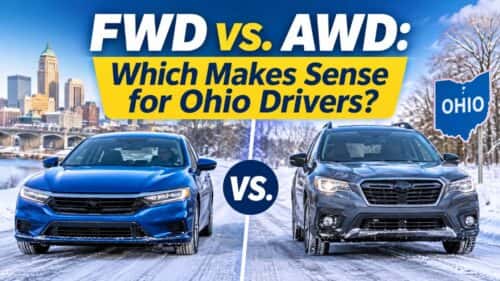
For many Ohio drivers, front-wheel drive is enough for everyday commuting, errands, and typical winter weather. All-wheel drive can add traction when accelerating on snow-covered or slippery roads, but it does not make a vehicle stop faster or eliminate the need for good tires and careful driving.
When comparing FWD vs. AWD, the better choice depends on where you drive, how often you encounter unplowed roads, and what fits your vehicle budget. Here is how to think through the difference before choosing your next used car or SUV.
What Is the Difference Between FWD and AWD?
Front-wheel drive (FWD) sends engine power to the two front wheels. The front wheels handle both steering and pulling the vehicle forward. Many sedans, compact cars, and crossovers use this layout.
All-wheel drive (AWD) can send power to all four wheels when the system determines additional traction is useful. The way it works varies by vehicle. Some systems operate primarily with front-wheel drive and send power rearward when needed; others use different power-distribution strategies.
AWD is not the same as four-wheel drive (4WD). Four-wheel-drive systems are commonly found on trucks and certain SUVs and may include selectable operating modes for different driving conditions. Always confirm the exact drivetrain and how its system operates on the vehicle you are considering.
Is AWD Better Than FWD in Ohio Snow?
AWD can be helpful in snow because it can distribute engine power to more wheels. That can make it easier to get moving from a stop, pull away on a snowy street, or maintain forward progress when one or more wheels have limited traction.
But there is an important distinction: getting moving and stopping are two different things. AWD does not automatically improve braking or cornering on ice. A vehicle with AWD can still slide, lose control, or need a long distance to stop if the road is slippery.
FWD can also be a sensible choice for Ohio winters. If your driving is mostly on treated city streets and highways, and you can avoid traveling during the worst conditions, a well-maintained FWD vehicle with suitable tires may meet your needs.
Regardless of drivetrain, slow down when roads are slick and leave extra space between your vehicle and the one ahead. The National Highway Traffic Safety Administration’s winter driving guidance also recommends checking tire condition and pressure before winter travel.
FWD vs. AWD: Which Costs Less to Own?
FWD vehicles are often simpler in drivetrain design, while AWD vehicles have additional components that can affect vehicle weight, fuel use, and maintenance needs. The actual difference depends on the model, engine, drivetrain design, age, mileage, and condition.
Rather than assuming AWD will always cost more—or that FWD will always save money—compare the specific vehicles you are considering. Look at:
- Fuel economy: Compare the ratings for the exact year, engine, and drivetrain.
- Tires: Check tread depth, wear patterns, age, and whether all four tires are a suitable match for the vehicle.
- Maintenance history: Review available service records and ask whether drivetrain maintenance has been performed as recommended.
- Vehicle condition: Have concerns about noises, leaks, warning lights, or unusual handling checked by a qualified professional.
- Insurance and ownership costs: Compare insurance quotes and consider fuel, maintenance, and expected tire costs alongside the purchase price.
When Does FWD Make More Sense?
FWD may be the practical choice if you:
- Mostly drive on paved, regularly maintained roads.
- Have a predictable commute around town or on major highways.
- Want to compare a wider range of everyday sedans and smaller crossovers.
- Would rather prioritize the vehicle’s overall condition, mileage, features, and price than pay extra for a drivetrain you may rarely use.
For many people, a FWD vehicle with good tires and responsible winter driving habits is a reasonable everyday option.
When Is AWD Worth Considering?
AWD may be worth considering if you:
- Frequently travel on roads that are not cleared quickly after snowfall.
- Drive on hilly roads, rural routes, or steep driveways.
- Need additional traction when accelerating in slippery conditions.
- Want an SUV or crossover that is available with an AWD system.
Think about your normal driving—not just the few days each winter when the weather is at its worst. If you rarely encounter deep snow or unplowed roads, AWD may not provide enough everyday benefit to outweigh the added ownership considerations for your situation.
What Should You Check on a Used AWD Vehicle?
If you decide to shop for an AWD vehicle, take time to verify the drivetrain and review its condition. A vehicle badge or model name does not always tell you which system is installed.
- Confirm that the specific vehicle is AWD by checking its listing, equipment information, and vehicle documentation.
- Look for warning lights or messages related to the drivetrain or traction system.
- Check all four tires for compatible size, type, tread depth, and similar wear.
- Review available maintenance records and ask about any drivetrain service.
- During a test drive, pay attention to unusual vibration, noises, or handling concerns.
If something does not feel right, have the vehicle evaluated by a qualified mechanic before making a decision.
How to Choose the Right Drivetrain for You
There is no single drivetrain that is best for every Ohio driver. Start with your typical routes, winter driving needs, and total vehicle budget. Then compare the actual vehicles—not just the drivetrain labels.
If you are comparing SUVs, you can explore used SUVs and verify whether each one has FWD, AWD, or 4WD. If you need a pickup, review the specific equipment on our used trucks and confirm whether it is two-wheel drive or four-wheel drive.
You can also browse all used vehicles at Dave Says Yes and compare the listings that fit your needs. Focus on condition, maintenance history, tires, features, and overall cost—not just whether the vehicle has AWD.
Frequently Asked Questions
Is AWD safer than FWD in snow?
AWD can provide additional traction when accelerating on snow, but it does not automatically make a vehicle safer in every winter situation. Tires, speed, road conditions, braking, and driver behavior remain important.
Does AWD help a vehicle stop faster?
No. AWD helps distribute engine power to the wheels, but it does not automatically shorten stopping distances. Safe speed, tire condition, and available traction are important when braking.
Is front-wheel drive good enough for Ohio winters?
For many drivers, yes. FWD can work well for everyday driving on maintained roads when the vehicle has suitable tires and the driver adjusts to winter conditions.
Are AWD vehicles more expensive to maintain?
They can have additional drivetrain components and maintenance considerations, but costs vary by vehicle and condition. Compare service records and manufacturer maintenance recommendations for the exact model.
The right choice is the one that fits your everyday driving, winter conditions, and budget. If you are comparing used vehicles, the team at Dave Says Yes can help you review available options and understand the features on the specific vehicle you are considering.
0 comment(s) so far on FWD vs. AWD: Which Makes Sense for Ohio Drivers?